Field Notes 2025: Time as a filter.
Little Vienna's first (proper) year in the wild.

18 projects, 15 clients, 5 agencies, 4 pitches, 3 pro-bonos.
That was 2025. The first year of just this, and nothing else.
There are plenty of pieces about the first year of going it alone. I’ve read many of them. Most are useful. They tend to follow a familiar line: ordered, sensible advice. Tax. Pipelines. Rates. Pitfalls. Usually written by people far more qualified than me to give that kind of guidance.
Problem is; I’m a strategist first and a business person very much second.
Little Vienna was (and still is) an experiment. The idea was to test if there was appetite to do things differently. Intentionally avoiding the established path of freelance, contracting, well defined projects - and see if an entity designed to deliver only creative and strategic thinking was a thing that could sell.
No fixed models or frameworks. No production. No real ‘business model’.
Just diagnosis, direction, and execution.
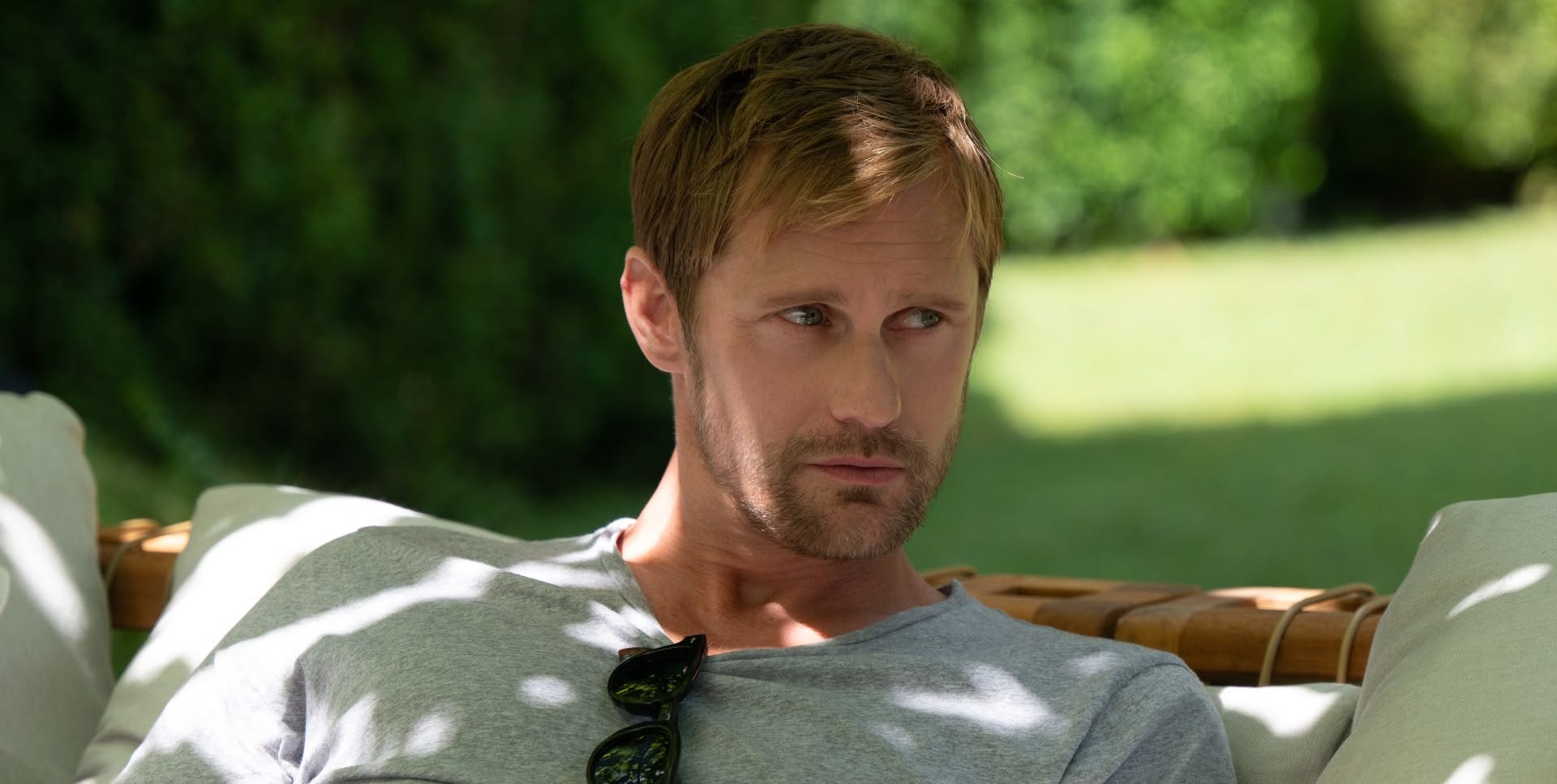
Strategy is certainly an ambiguous concept (hard to explain to those outside the industry), and the jury is still out on whether a ‘strategic and creative thinking shop’ is even wanted, needed, or commercially viable.
I think it is. More than that, I’m starting to know it.
What I couldn’t find in my notes, invoices, or records was a clean answer to whether the Little Vienna experiment had “worked”. Those pieces weren’t much help, memory turned out to be better.
Looking back, what mattered wasn’t everything that happened, but what time quietly kept - and what it discarded without ceremony. That felt like a more honest filter.
What follows isn’t advice, or a post-hoc justification. They’re field notes. Things that survived contact with reality in 2025, that I’m carrying into 2026.
—
I. Act more than you plan.
Like many in my profession, I tend to make an impressive number of extremely detailed plans. Almost none of them survive contact with the real world.
Planning is safe and without risk. Action isn’t. Which is why planning so often becomes a substitute for it. I’m self aware enough to know that much of what passes for planning is really a grasp at control and comfort. The problem is that our control of the world is far more limited than we’d like to admit.
Throughout 2025, whole stretches of planning that felt crucial at the time quietly shuffled off my mental coil. Plans days in the shaping barely register now. The pressure to get things right before starting never once led to getting things right from the outset.
What did stick was something simpler. For most people, detailed plans matter less than broad intentions. You never meet the future without faculties. You meet it with the same judgement, instincts, and problem-solving ability you already have. That’s reassuring.
As Miyamoto Musashi put it:
“Know the way broadly, and you will see it in all things.”
Maybe that aged Samurai was right. They usually are.
A big part of this is to stop aiming for certainty. I love the phrase ‘a bias for action’. It’s a brilliant thing to try and develop in yourself. You will make mistakes. You will (probably) get called out on them. But they won’t survive the memory net into 2027. Promise.
I used to hold work back until it felt finished. Safe. Polished. That isn’t a workable way to think or live. The rule that stuck was simple: be mostly sure, and send.
“A good-enough decision made in time beats a perfect decision made too late.”
Militaries teaches their students to act once they believe their plan is roughly 70% right, knowing that conditions will change anyway, feedback will arrive through action and adjustment is part of execution, not a failure of planning.
Momentum matters more than we think. So in 2026 I’m aiming to get comfortable at 70% certainty, then move. That’s down from 85% last year by the way.
—
II. Don’t be a solitary animal.
I’d always thought of myself as someone who could push through alone. Head down. Bloody-minded. Like many, I’d had a tendency to suffer in silence and call it discipline. 2025 started to dismantle that idea.
Much to my own surprise, other people turned out to be much more of a source of energy rather than a drain. Far more than expected. Conversations we’re hugely valuable (both personally and professionally), momentum came from people - clarity too. I’d been wrong to confuse independence with isolation.
It was a confidence thing too. Once I started reaching out, people came out of the woodwork; old contacts, loose ties, people I’d worked with briefly who said they’d love to work together again. Nothing dramatic changed. I just asked.
It turns out this experience isn’t unusual.
“In the 2024 Leapers survey of freelancers and self-employed people, around 72% said they felt isolated or lonely sometimes or frequently, and about 33% reported feeling this way frequently - a rate roughly three times the national average for loneliness.”
Going it alone has a real social cost.
So in 2026 I’m making a deliberate effort not to default to withdrawal. Whether it’s a coffee, a beer, or even god-forbid - a networking event, I’m going to implore myself to meet strangers in 2026. Not because it’s good networking, but because it’s good for thinking, good for work, and good for staying human.
People are usually kind. They often want to help. You can often help them in return with very little effort. And, practically speaking, people know other people.
—
III. Kill the Anglo-Saxon humility.
It’s a bit of a grim thought, especially if you’re British - but sometimes you have to back yourself actually past the point of doubt.
This approach gets a lot of bad press as many abuse it, but the harsh truth is - if you don’t believe in what you’re saying, no-one else will. The good news is; there’s a clever way around this. As Joanne Cheung (formerly of IDEO) put it:
“To overcome impostor syndrome, have confidence in your depth of curiosity rather than your expertise.”
I’m acutely aware that I have relatively little expertise for my level of seniority. What I do have is an insatiable curiosity, the ability to take an unorthodox perspective on things, and a lot of imagination. It turns out that matters more than knowing the answers.
If you work in the creative industries, or in consulting, you’re not brought in to be smarter than your clients, or to know more about their business or category than they do. That would be absurd. You’re brought in because you’re curious, imaginative, and able to see things they can’t.
Confidence, in practice, can look unglamorous - even stupid. It’s asking the obvious question. Clarifying the assumption no one wants to. Repeating back something simply when the room is overcomplicating it. Bringing a bit of human reality into serious, rigid, and often slightly soulless conversations.
You’re part therapist. Part court jester (in the original sense).
Many people struggle with impostor syndrome, and the world right now is struggling just as much with the opposite. 2025 taught that assurance is part of the job. Not something given, but something created.
The British instinct is to underplay, soften, and apologise for taking up space. It’s deeply ingrained, and hard to unlearn. But you don’t have to be the smartest person in the room. You just have to be confident enough to look a bit foolish, ask the questions others won’t, and call spades spades. That’s what creative people are for.
—
IV. Dispassionately triage the patient.
Working as an external consultant sharpened something I knew was crucial, but hadn’t fully learned to apply: Distance.
The harsh truth is that many projects need to be treated like a patient in critical surgery. You care, but you don’t get emotionally entangled. You’re going to have to do things they won’t enjoy.
2025 taught me not to pour heart and soul into everything. Those are finite resources. Being a deliberate outsider isn’t coldness, it’s professionalism. Distance is what allows you to do the work people inside the organisation can’t, or won’t, even if they resist it at first.
No project is boring, but not every project is an opportunity to do something brilliant. Some just need saving, steadying, or painful clarity. There’s no shame in that. In fact, it’s often the most valuable work to the people you’re working with.
One piece of borrowed advice stuck with me, even though I’ve lost its source:
“All of the work you do should be either simple, or wonderful. But never anywhere in between.”
It’s an excellent filter. Some projects call for pragmatism, restraint, and clean execution. Others deserve ambition, imagination, and care. Few require both at the same time.
The job is to diagnose first. What does the patient actually need? Then apply energy and resource accordingly. Get that right, and both kinds of work improve.
—
V. Disconnect the emotional from the fiscal.
This one took longer to learn.
2025 taught me, fairly bluntly, that you have to separate emotion from money if you want to make good decisions.
We all know, intellectually, that money isn’t ‘real’ in the way we treat it. It’s a shared concept, a unit for organising exchange. But very few of us feel it that way. Money carries history. Anxiety. Safety. Shame. Often going back far further than our working lives.
As Morgan Housel writes in The Psychology of Money:
“People do some crazy things with money. But no one is crazy. People make decisions based on their own unique experiences with the world, which seem to make sense to them in a given moment.”
This explains why money feels heavier than it is. We don’t treat it as arithmetic, we treat it as meaning.
When I had a salaried job, money arrived at the end of the month I really didn’t consider it much. Of course I would have liked more of it - but that’s about where my relationship with it stopped.
Going independent changes things, you’re continually exposed to its full emotional range. I’ve been high-balled and low-balled this year; and in the moment those numbers can feel like judgements or verdicts. As if they say something about competence, worth, or standing. They feel personal.
Money behaves badly when it’s fused with identity. Psychologically, that’s normal. It’s also deeply unhelpful.
What helped was treating money as what it actually is: A resource to be allocated. Not a reflection of who I am to the businesses I work with. Context matters, the same number can be wrong in one situation and right in another; depending on needs, context, and timing.
Seeing money as belonging to the business (rather than to me personally) also made that separation easier. The money isn’t mine - it belongs to the business, and the business is an unfeeling purely pragmatic entity
In 2026 I’m aiming to be deliberately unemotional about money. Not careless. Just clean. As Harvey Mackay put it:
“A good deal is one where both parties feel they’ve won.”
Once you disconnect the emotional from the fiscal, decision-making gets simpler. Not easier - but simpler.
—
VI. AI: Be deliberate about what you hand over.
Oh, AI.
An extraordinary tool, genuinely transformative; but also corrosive if used without restraint. Like any powerful tool (fire / Pot Noodles) it can quickly turn from brilliantly useful, to plain damaging.
I leaned on it more than I should have this year. I asked it questions I was actually better placed to answer, I let it smooth over uncertainty instead of sitting with it.
Over time, I could feel the beginnings of the cognitive atrophy a lot of people are talking about. The thinking muscle softened and temptation to default to the external hive mind grew stronger.
The irony is Sam Altman even warned us:
“AI is like having a team of extremely eager interns who know a lot, but don’t know what matters.”
I’ve heard it put better:
“AI is like having a billion interns. They’re hungover, they don’t actually know anything, and they’re all trying to appease you.”
AI multiplies labour, not judgement. It’s a wonderful assistant but it can’t replace the strange alchemy of human thinking. It doesn’t get inspired, sad, heartbroken, joyous, illogical. It doesn’t connect things sideways. It doesn’t have taste. Fundamentally in our industry - it doesn’t know what good is.
In 2026 I’ll be more deliberate about what I hand over, and more protective of what’s worth keeping human. And I’ll carefully consider what the use cases are for a billion hungover, insecure interns (they are many and varied).
—
For 2026, the Little Vienna experiment continues.
The way the world seems to be moving feels oddly favourable to small, thinking-led work. Conglomerates continue to conglomerate. Automation and optimisation continue to strip friction out of systems - and with it, meaning.
Efficiency is winning. Sense is lagging behind.
It feels like a good moment to be testing the opposite. Judgement over process, thinking over output, and human curiosity over mechanical certainty. I don’t know how large that gap will become, or how long it will stay open.
But I think it’s worth pursuing for now.
—
If you have any thoughts, feelings, or questions - please feel free to drop them here or contact me at toby@littlevienna.co.uk. Little Vienna is a research, strategy, and creative practice based in London. Find out more at littlevienna.co.uk
References:
[1^] Succession (Season 4).
[2^] 2024 Leapers Survey [https://www.leapers.co/research/2024/] Follow Matthew Knight for the 2025 update.
[3^] Miyamoto Musashi: The Book of Five Rings (c.1645).
[4^] RMA Sandhurst: Military decision-making doctrine.
[5^] Joanne Cheung [via Twitter].
[6^] Toby’s 3rd Moleskine (Black III).
[7^] Morgan Housel: The Psychology of Money.
[8^] Harvey Mackay [widely quoted maxim].
[9^] Sam Altman [via interview].
[10^] Toby’s 2nd Moleskine (Green II).
The 2025 Leapers data just dropped too:
https://leapers.co/research/2025/report